
Turning tendencies are a group of concepts that pilots should be familiar with, as they describe the factors and effects of unbalanced forces on an airplane. These tendencies change throughout the flight due to various factors. During training, it is important to recognize and understand when and how they occur.
1. Torque Effect
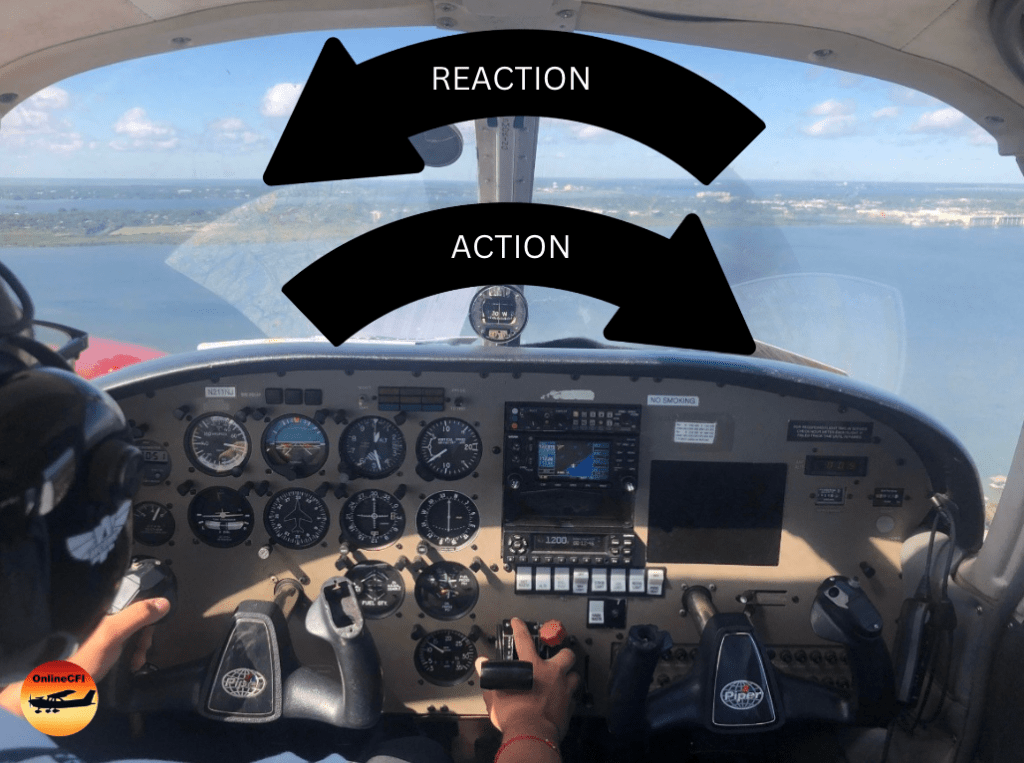
According to Newton’s Third Law of Motion, for every action, there is an equal and opposite reaction. The clockwise torque generated by the engine has a counteracting counterclockwise reaction, which tries to rotate the airplane in the opposite direction. This torque reaction creates a rolling tendency to the left. On the ground, the torque reaction causes friction on the left tire. An engine offset can help counteract this turning tendency. Torque effect is greater at higher power settings.
2. P-Factor (Asymmetrical Loading)
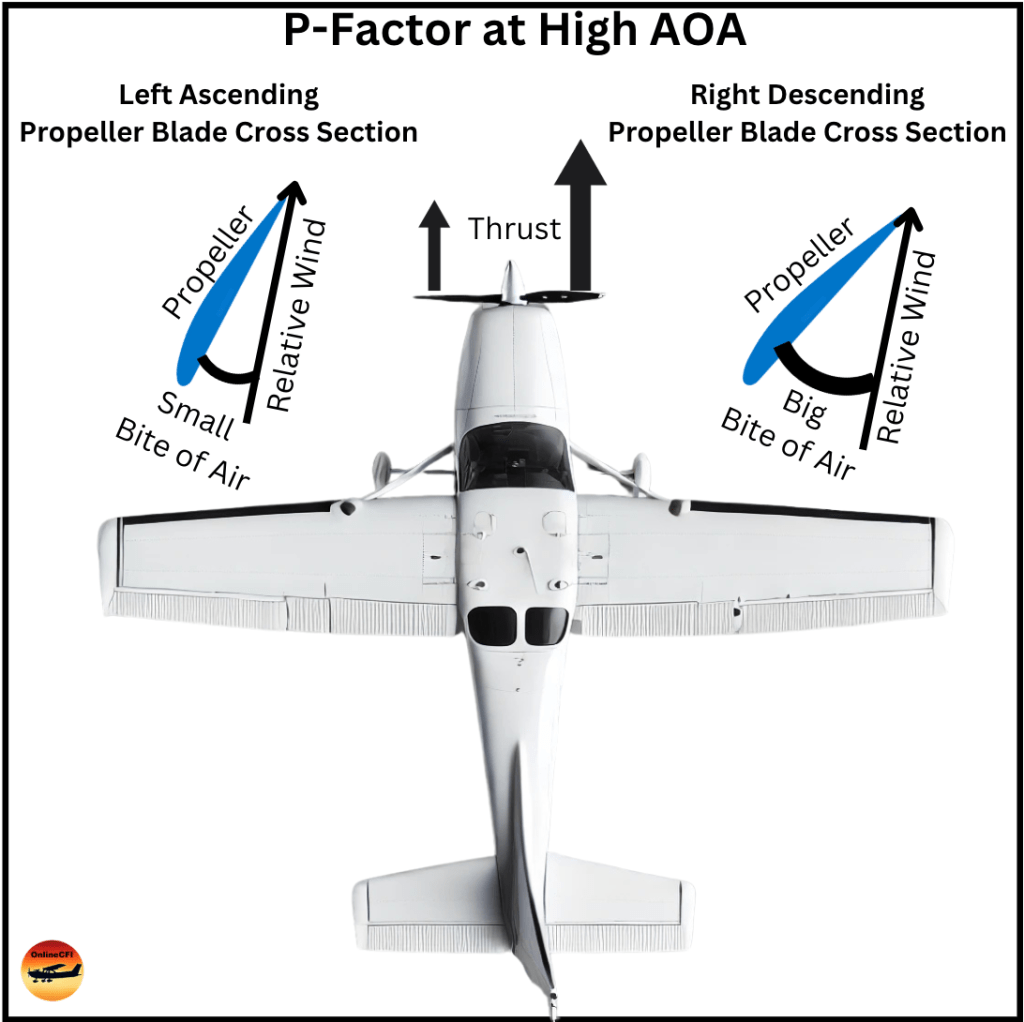
The propeller is affected by turning tendencies due to its natural airfoil design. When an airplane is flying at a high angle of attack, the downward-moving blade (on the right side viewed from the cockpit) bites into more air, generating more thrust. Since the right side of the propeller produces greater thrust, a left-turning moment occurs. The P-factor is greater at higher angles of attack.
3. Corkscrewing Slipstream
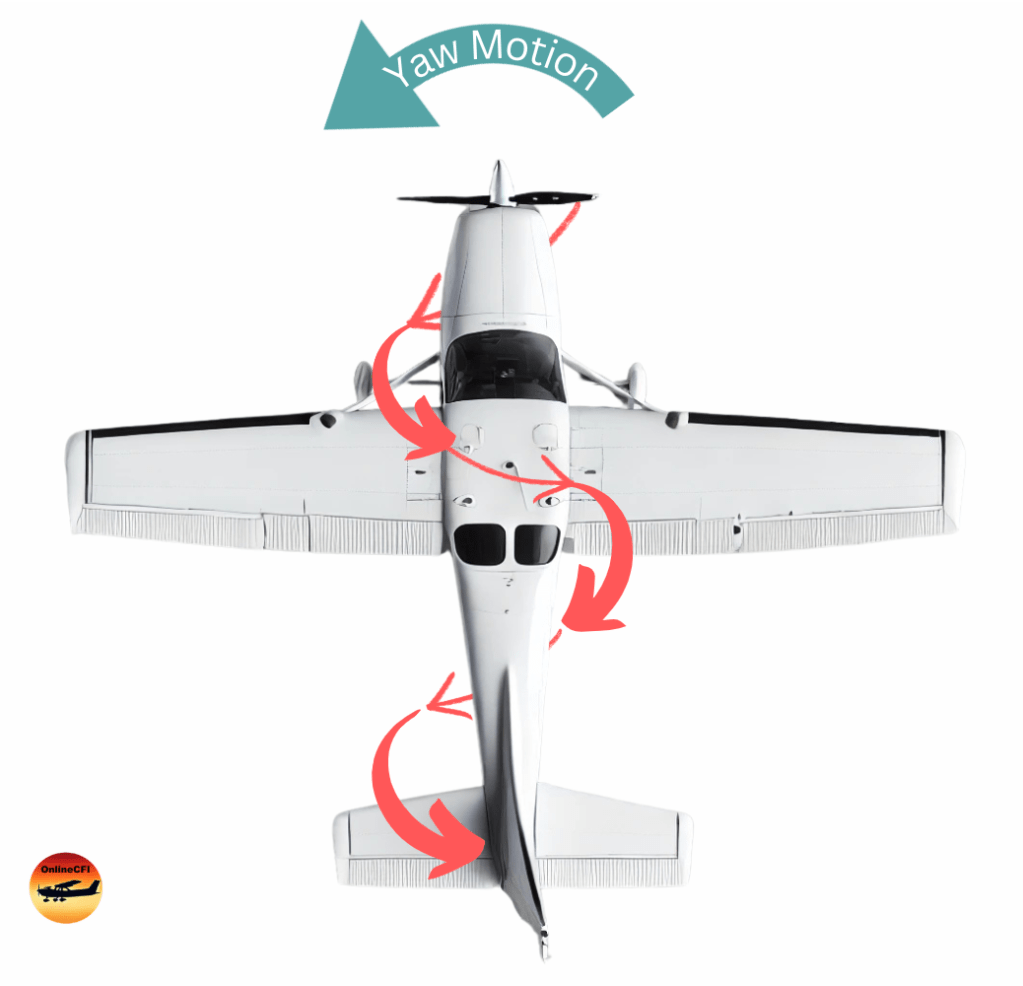
The propeller’s slipstream leaves a corkscrew effect around the fuselage. This airflow surrounding the fuselage of your plane hits the left side of the vertical stabilizer, creating a yawing motion. The nose of your plane yaws to the left. The corkscrewing slipstream has a greater effect on the yaw at high power settings.
Gyroscopic Effect
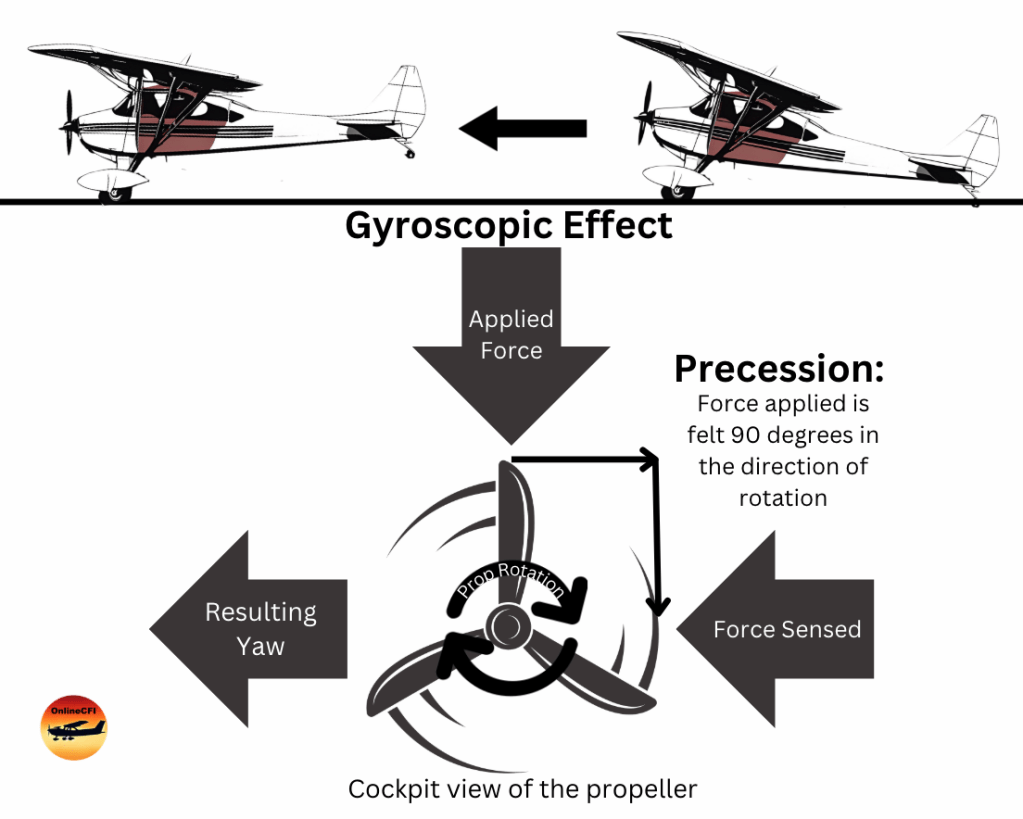
The propeller as it rotates, acts like a gyroscope. A characteristic of gyroscopes is precession. Precession refers to the natural tendency of a gyroscope to feel an applied force 90 degrees in the direction of rotation. The resulting yaw in the picture above is to the left.
The turning tendencies are important to understand as soon as you start flight training. Understanding these factors will help you control the airplane and apply the required corrections at an appropriate level! Be aware of the turning tendencies as they will be felt in takeoff, changes in the angle of attack, changes in the power settings, maneuvers and landings!
 OnlineCFI
Leave a comment